

On Christian Hope
In preparation for two lectures on The Telos of the Ages with Brian Zahnd, I over-prepared and seem to have completed an extra lesson. Rather than archiving it, I’ve chosen to share it here. These matters are complex, so bear with me as I attempt to make it accessible.
Essentially, I am attempting to weave together three strands:
A demonstration of the only dogma the church agreed on or required concerning “the End Times,” outlined as three points in the final form of the Nicene Creed.
A contrast concerning the meaning of Parousia (“coming”) through two lenses: a timeline vs. a transfiguration.
My distillation/interpretation of how I think Sergius Bulgakov might help us.
For Sergius Bulgakov, Christian hope concerns the full manifestation of the divine-human life established in Christ. That is, the Incarnation, Resurrection, and glorification of Jesus reveal creation’s destiny. And the Nicene Creed gives us three (and only three) dogmatic confessions of the telos (end, fulfillment) through which to explore that hope: Christ’s coming in glory, his judgment, and the life of the age to come.
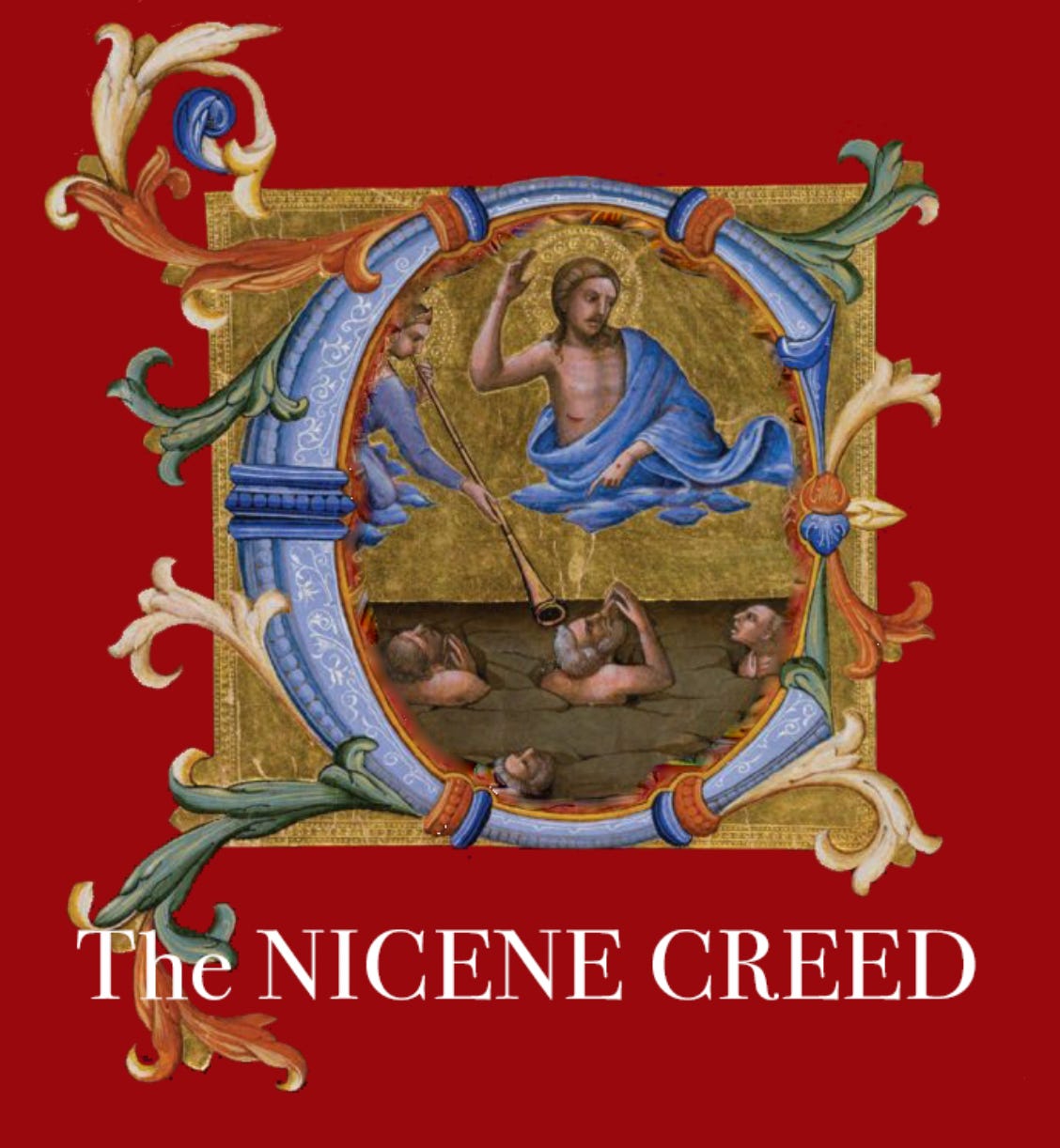
1. “He will come again in glory…”
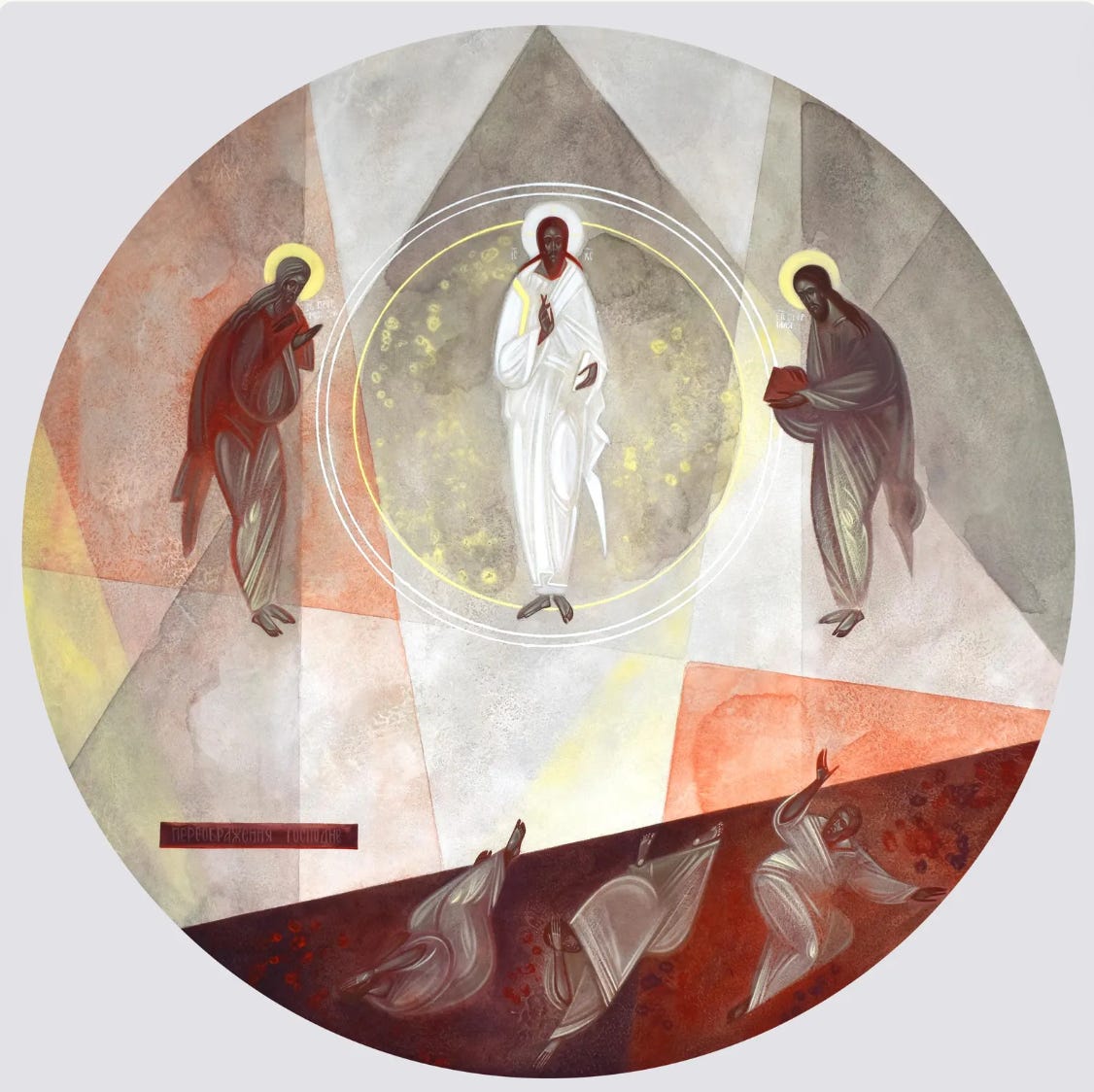
The creed anticipates the Parousia as the universal manifestation of the glorified Christ. While much of my early Christian life and studies on the “end times” was wasted trying to construct and debate a chronology of “the last days” from the Book of Revelation, I have come to believe that the clearest image we have of the Parousia the Transfiguration of Christ (see Matthew 16:28-17:12; Mark 9:1-13; Luke 9:27-36; 2 Peter 1:16-18) gives us a richer understanding of his coming than speculating over timelines of world events (past or future).
a. From timeline to transfiguration
A chronological account of the Parousia often runs like this: Christ came once, Christ departed, history continues, and at some future point Christ will return. The emphasis falls on absence, waiting, and a future arrival. But Bulgakov profoundly qualifies this picture. Because the risen Christ remains the God-Man, divine and human existence are permanently united in him. So the destiny of creation is already disclosed in Christ, especially at his transfiguration.
b. The Ascension glorifies human existence
If we only imagine heaven in spatial terms, the narrative becomes: Jesus was here, Jesus went away, Jesus is elsewhere, and one day Jesus will return. But what if the Ascension of Christ signifies the glorification of Christ’s humanity? Through his Ascension, human existence has entered divine glory in Christ. Therefore, Christ is not simply absent while the world waits.
c. The Parousia unveils and consummates
The central question is less “When will Christ return?” than “What does his coming mean?” The “second (?) coming” is not primarily Christ traveling back to a place he once occupied. It is the unveiling and consummation of the divine-human reality established through the Incarnation. The world becomes fully transparent to the glory already revealed in the risen Christ.
d. Present participation and future fulfillment
The Church, the Spirit, the sacraments, and creation itself already participate in this divine-human reality. Incarnation, Resurrection, Ascension, Pentecost, and Parousia belong to one movement of cosmic transfiguration. Yet the future does remain important. The Parousia is not reduced to a metaphor. Resurrection, judgment, and consummation are also realities to be fulfilled.
Discussion
(These are discussion questions prepared for the retreat, if I had presented publicly, but feel free to respond in the comments):
How does the Ascension change our understanding of Christ’s presence?
What does the transfiguration help us see that a timeline by itself might miss?
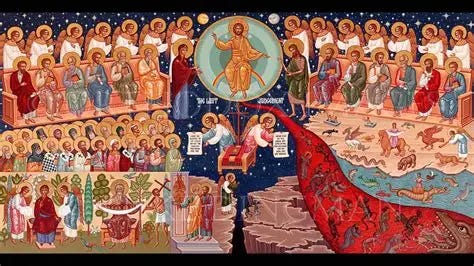
2. “…to judge the living and the dead”
I believe he will come to judge the living and the dead. I once thought this final judgment would leave no room for repentance or a willing faith response—though passages such as the Christ-hymn in Philippians 2 say otherwise. But the Gospels reveal that the Christ who comes in glory also reveals the truth of our lives.
And restorative judgment names the healing purpose of that encounter.
a. The Judge is the glorified God-Man
Judgment belongs to the same work of salvation as the Incarnation and Resurrection. The One who judges humanity is the one who has united himself to humanity. Bulgakov (and I would argue, Jesus, too) regarded judgment in relation to the divine-human destiny already revealed in Christ.
b. Glory brings the truth into the light
The unveiling of Christ thus exposes and cleanses us of everything in us that resists his love. Restorative judgment does not excuse evil or make suffering insignificant. It brings wrongdoing into the truth so that healing becomes possible.
c. Judgment distinguishes the person from the evil
In Bulgakov’s account, judgment separates what belongs to a person’s God-given life from what corrupts it. Its purpose is to purify and restore the person. Judgment judges the evil that wounds humanity; it does not simply identify the human being God created with that evil and discard them. This gives restorative judgment both seriousness and hope.
d. Restoration can involve painful purification
An encounter with divine love may be painful to the depth and degree we are attached to what harms ourselves and others. So Bulgakov (following saints like St. Macrina the Younger and George MacDonald) understands the suffering of judgment in relation to our purification. Restoration involves rehabilitating our response to God, not merely receiving a favorable verdict imputed from outside.
e. Judgment serves creation’s fulfillment
Creation is intrinsically oriented toward communion with God. Judgment confronts what obstructs that communion. Its restorative purpose belongs to the larger movement of transfiguration: it is one means by which the life already disclosed in Christ becomes the life in which humanity participates fully.
Restorative judgment tells the truth about evil while seeking the healing of the person. Christ’s glory exposes what needs to be overcome and reveals the life for which humanity was made.
Discussion
Thinking of John 5:22–29 and 1 Corinthians 3:11–15, how does this account of judgment, exposure, and purification relate to salvation?
What distinguishes restoration from simply overlooking wrongdoing?
How might the identity of Christ as the all-merciful Judge shape our understanding of the judgment?
3. We look for the life of the age to come
Creation is moving toward the end of the ages, “the restoration of all things [and all people]” (Acts 2:21), when God shall be “all in all” (1 Corinthians 15:28). The divine-human destiny revealed in Christ reaches its fullness in all creation.
a. Creation’s destiny is communion with God
Bulgakov’s theology of divine Wisdom [Sophiology] explains why creation can receive divine life. The world is made for communion with God. The Parousia manifests and consummates this purpose; creation’s deepest truth becomes fully apparent.
b. The already and the not yet belong together
The fulfillment (or telos of the ages) already exists in the glorified Christ, but creation has not yet become fully transparent to that reality. The Bride is not merely waiting for the Lamb’s arrival. Through the Spirit, she [they] already participates in the Life whose fullness they await. History is the arena in which creation moves toward this divine-human fulfillment.
c. The end of the ages is fulfillment
The phrase “end of the ages” directs attention to the completion of God’s purpose. The New Testament describes three epochs—“this present evil age,” “the age to come,” and “the end of the ages.” Christian hope extends beyond the succession of ages to the end of history, Christ's victory, and the full communion of creation with God. The life of the age to come fulfills the destiny already disclosed in the risen Lord. At the same time, Paul refers to the Bride as “those upon the end (telos) of the ages has come” (1 Corinthians 10:11)!
d. God is all in all
In 1 Corinthians 15:24–28, Paul connects “the end of the ages” with Christ’s victory over every hostile power and the destruction of death, the last enemy. God being “all in all” names the final horizon of this victory. For Bulgakov, that horizon sustains the hope of universal restoration: evil and death cannot define or delimit creation’s final condition.
e. Fulfillment opens into eternal life
The coming age is the fullness of communion with God. Even now, created persons are being “transfigured from glory to glory into the image of Christ” (2 Corinthians 3:18) as they share in the divine life. The ever-deepening divine-human fulfillment Bulgakov describes gives Christian hope its breadth: all creation is directed toward the unveiled manifestation of Christ’s victory.
We look for the life already revealed in Christ to become fully manifest throughout creation. His glorious presence, restorative judgment, and the end of the ages belong together within that hope.
Discussion
How does “God is all in all” shape our understanding of both judgment and the age to come?
How might participation in that promised life shape the way we live now?
Bonus Question: Will there be an end to history?
If our “end times” focus is focused on the transfiguration, rather than fixated on timelines, then the Parousia is already something we’re already experiencing. But does this mean time continues without end? Is there no end to history?
a. This age comes to a real conclusion
Both the Creed and Bulgakov explicitly give history a beginning and an end. The present mixture of good and evil, corruption, and death does not continue forever. The life of the coming age succeeds the history we now inhabit.
b. The end exceeds history’s calendar
The end is not another event alongside the rise and fall of empires. It brings the present order of temporal history to its conclusion. Bulgakov takes the unknown day and hour to mean more than a withheld date: rather, the consummation exceeds the calendar by which we measure this age.
c. Creation continues in a transformed life
The end of history does not mean the annihilation of the world, human persons, or everything that has mattered within history. God renews and transfigures creation. Nor should we imagine the coming age as a frozen ‘now.’ Eternity doesn’t destroy time; it transfigures it so created life can remain capable of inexhaustible participation in God. The nature and shape of that existence, or how that life unfolds, is a mystery, as unimaginable to us as life beyond the womb is to babies still developing in the womb (see 1 Corinthians 15:35-51. “Listen, I tell you a mystery… we will all be changed” (51).
d. Fulfillment requires God’s action
History matters, and human freedom and faithfulness matter within it. Nevertheless, historical progress cannot manufacture resurrection. God must ultimately bring creation across the threshold into its new life. For this reason, Bulgakov (and I would add Chris EW Green) resist interpreting transfiguration as inevitable social or spiritual evolution. They (and I think Jesus, Paul, and Peter at least, not to mention Isaiah and Joel) seem to think that the end of history will involve a divine intervention—another mystery.
For Further Reading
Sergius Bulgakov, The Bride of the Lamb, translated by Boris Jakim (Eerdmans, 2002).
See chapter 8, especially the sections on the end of this age, the parousia, the transfiguration of the world, and the universal resurrection.
See chapter 6, on history.
Sergius Bulgakov, The Comforter, translated by Boris Jakim (Eerdmans, 2004).
See chapter 5, on the gifts of Pentecost.
Paul L. Gavrilyuk, “Divine Judgment in Pavel Florensky and Sergius Bulgakov,” International Journal of Orthodox Theology 9, no. 3 (2018). (Linked to full PDF).
Thanks for this write up, Bradley.
One of my questions is about a sudden Divine action in the future.
If there is a time sometime in our future in which God will bring an end to the current age in some sort of sudden, dramatic transformation, then does that not make God complicit in the ongoing mixture of sorrow and joy? I know this is a bit bold, but I know you know my spirit: what is God waiting for?
If, however, the new heavens and new earth is the “natural” progression of the irresistible Gospel, then the manifestation of the new creation is incarnational, with God electing to work in and through flesh. And this transformation is inevitable because of the decisive action of Jesus in the incarnation.
If humanity really is elevated since Christ has been glorified, then isn’t new creation our true potential?
Perhaps we are still in the early church and this reality isn’t as unreachable as it presently seems. Maybe we aren’t the main characters, but we are sowing seeds for the future generations of believers to shake off the dregs of the old creation.
Yes, yes and yes!