

Introduction

Those who’ve known me (Bradley) for a while probably also know my friend Safi Kaskas. Briefly, he is a Jesus-loving Muslim, Qur’anic translator and scholar, and a deeply committed bridge-builder/peacemaker. Despite being in his eighties, he continues to create opportunities to write and speak about how Jesus is the great Unifier, emphasizing the shared teachings of Jesus and the Qur’an.
In this two part video series, Safi discusses with me the foundations (part 1) and principles (part 2) of his “IQRA’ Declaration to Humanity.” As a spokesperson for Islam, he represents the best of that tradition in a way that makes space for a Christian-Muslim collaboration for peace, rooted in our common humanity and our belief in Jesus as the one and only Christ.
While we hold our doctrinal differences with deep respect, our mutual regard has led us beyond dialogue into collaboration as peacemakers and into communion as Jesus-following lovers of God.
One of the great values of viewing our conversations is that Christians can become informed about Islam from an actual, deeply-devout cradle-Muslim (originally Lebanese, now American) who regularly preaches in Mosques on these very themes. No, not all Muslims share his perspective, just as not all Christians share mine—but far better to understand another faith from an authentic adherent than from the caricatures we see in public.
Safi’s Ten Core Principles
In the videos to follow, Safi’s ten core principles for human flourishing are as follows:
1. Humanity Is One Family
The Oneness of God is the foundation of the unity of humanity. All people share a common origin, equal dignity, and a shared responsibility for the future of our world. Diversity of cultures, languages, nations, and traditions is not a cause for conflict but an opportunity for mutual understanding, cooperation, and enrichment.
2. Human Dignity Is Sacred
Every human being is endowed with God-given dignity. Human dignity transcends race, nationality, religion, gender, social status, and political identity. The protection of dignity requires respect for life, freedom, conscience, equality before the law, and participation in public life.
3. Knowledge Is a Sacred Trust
The Qur’an places knowledge at the center of human development. Learning, research, education, and intellectual inquiry are not merely practical pursuits; they are moral responsibilities. Knowledge should be used to advance wisdom, alleviate suffering, strengthen justice, and serve humanity.
4. Revelation and Reason Work Together
Faith and reason are not adversaries but partners. Revelation provides moral guidance and purpose; reason enables humanity to understand reality, solve problems, and advance civilization. The future requires both ethical wisdom and scientific knowledge.
5. Justice Is the Foundation of Peace
No lasting peace can exist without justice. The Qur’an commands fairness, accountability, honesty, and equal treatment under the law. Governments, institutions, and individuals alike are responsible for protecting rights and resisting oppression.
6. Mercy Strengthens Society
Justice must be accompanied by mercy. The Qur’anic vision calls for compassion toward the vulnerable, care for the poor, support for families, and solidarity within communities. Mercy transforms power into service and strengthens the bonds that hold societies together.
7. Consultation Builds Good Governance
The Qur’an describes healthy societies as those whose affairs are conducted through consultation (Shūrā). Consultation affirms human dignity by respecting the voices and participation of people in matters that affect their lives. Good governance requires transparency, accountability, fair representation, and commitment to the common good.
8. Humanity Is Steward of the Earth
Human beings are entrusted with responsibility for the care of creation. Environmental protection, sustainable development, responsible use of resources, and concern for future generations are essential dimensions of this trust. The earth is not merely a possession; it is a trust to be preserved and passed on.
9. Technology Must Serve Humanity
The digital age presents both extraordinary opportunities and significant ethical challenges. Artificial intelligence, digital communication, and emerging technologies must be guided by principles of truth, justice, transparency, privacy, and respect for human dignity. Technology should strengthen human flourishing, not undermine it.
10. Renewal Begins with Iqra’
Every generation is called to renew its engagement with the Qur’an. Renewal does not mean abandoning foundational principles. It means applying timeless values to changing circumstances. The command Iqra’ invites every generation to learn, reflect, innovate, and contribute creatively to the advancement of civilization.
Part 1 - Foundation (22 minutes)
Part 2 - Principles (45 minutes)
Publications
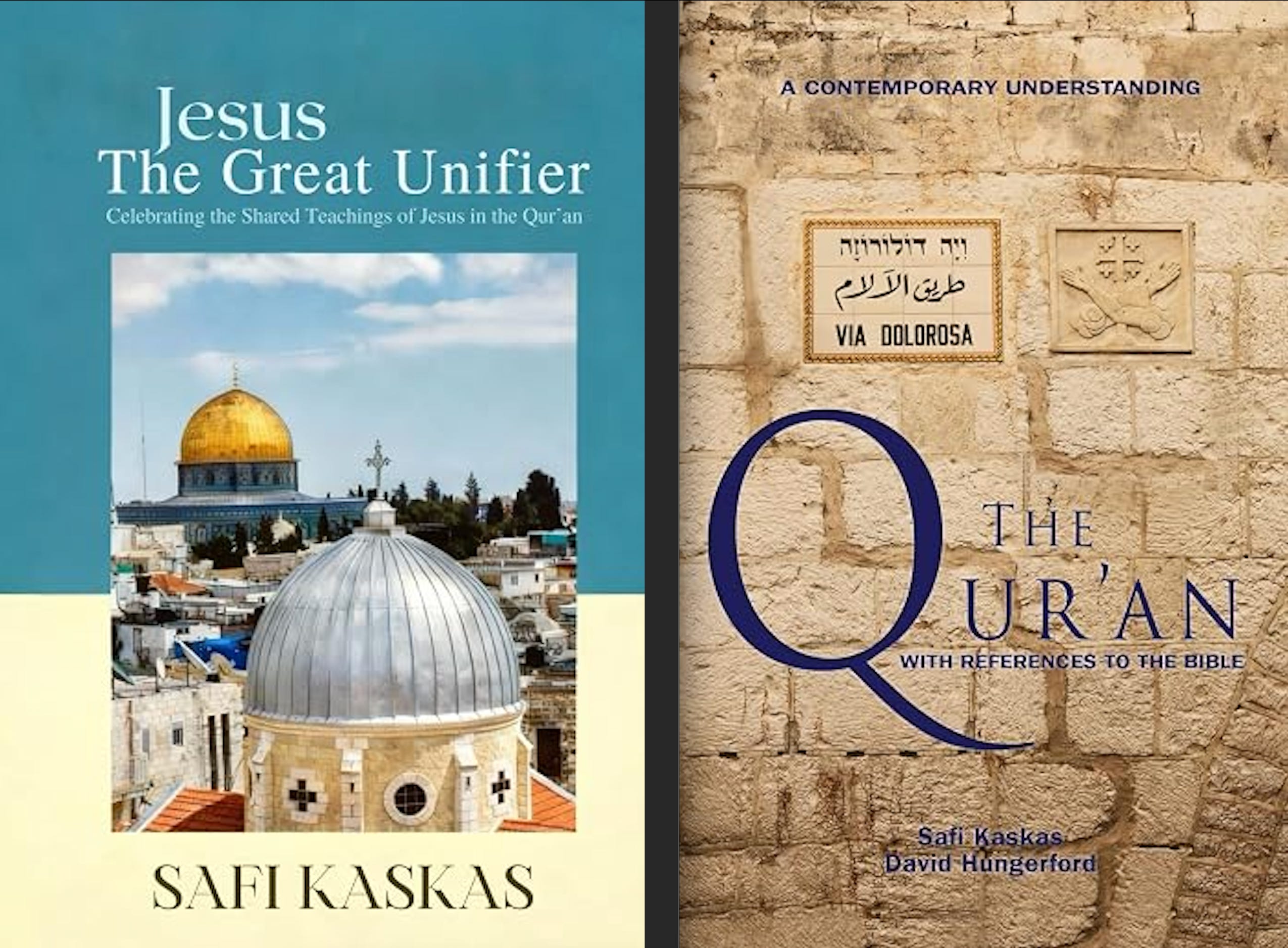
CLICK TITLES for links to purchase:
Jesus the Great Unifier: Celebrating the Shared Teachings of Jesus in the Qur’an
by Safi Kaskas (Author)
The Qur’an - with References to the Bible: A Contemporary Understanding
by Safi Kaskas (Author), David Hungerford (Author)
P.S. You will meet a beloved character inspired in part by Safi named “Amir Kaskas” in Wm. Paul Young’s Return to the Shack: A Journey into Redemption coming October 6 (available for pre-order now).
So cool to read this..and, weirdly, I just posted about the 1219 meeting between St Francis and Sultan al-Kamil and referred to your post from earlier this year, where you mentioned Safi’s response to the rhetoric at the Presidential Prayer Breakfast.
Look forward to checking out the videos.
Safi is a wonderful teacher and as he is where I learned about you, Bradley❣️
It would be cool if you did a video with Lee Weissman, who is a friend of Safi’s and a big supporter of Israeli-Palestinian peace and who has talked his fair share of young Muslims away from radicalism.
There’s such a divide, everyone in their silo, made much worst by Oct 7/2023.
My dream video would be the 3 of you having a discussion about peace and interfaith.